Crochet Hook Size Chart: Metric, US and UK Conversions
Your pattern calls for a 6 mm hook, the one in your hand says J-10, and the vintage hook you inherited from Grandma just says “4.” Are they the same? (Yes, yes, and yes!) Crochet hooks are labeled three or four different ways depending on the brand and where it was made, and it’s confusing for everyone, not just beginners.
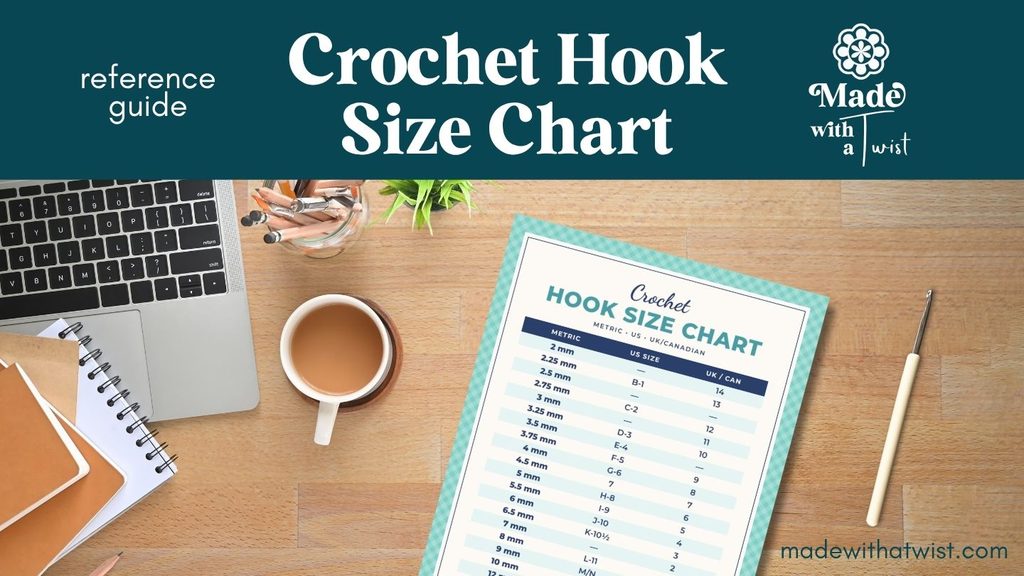
This crochet hook size chart puts every system side by side: metric (millimeters), US letters and numbers, and old UK/Canadian sizes. Below the chart you’ll find which hook to use with each yarn weight, how to find the size on your hook, and when to go up or down a size.
Jump to a section
- Crochet hook size chart (mm, US, UK)
- How to find the size on your hook
- Which hook to use with each yarn weight
- Steel hooks for thread crochet
- Inline vs. tapered hooks
- When to go up or down a hook size
- Crochet hook size FAQ
Crochet hook size chart: metric, US and UK
Always go by the millimeters. The millimeter size is the diameter of the hook’s shaft, and it’s the one measurement every brand agrees on. Letters and numbers are where things get messy.
| Metric | US size | UK / Canadian |
|---|---|---|
| 2 mm | — | 14 |
| 2.25 mm | B-1 | 13 |
| 2.5 mm | — | — |
| 2.75 mm | C-2 | 12 |
| 3 mm | — | 11 |
| 3.25 mm | D-3 | 10 |
| 3.5 mm | E-4 | — |
| 3.75 mm | F-5 | 9 |
| 4 mm | G-6 | 8 |
| 4.5 mm | 7 | 7 |
| 5 mm | H-8 | 6 |
| 5.5 mm | I-9 | 5 |
| 6 mm | J-10 | 4 |
| 6.5 mm | K-10½ | 3 |
| 7 mm | — | 2 |
| 8 mm | L-11 | 0 |
| 9 mm | M/N | 00 |
| 10 mm | N/P-15 | 000 |
| 12 mm | O | — |
| 15 mm | P/Q | — |
| 16 mm | Q | — |
| 19 mm | S | — |
| 25 mm | T/U/X | — |
A dash (—) means that system doesn’t have a common equivalent for that size.

Why the letters don’t always match
- Some sizes have no letter. 2.5 mm, 3 mm and 7 mm hooks are common, but there’s no standard US letter for them. That’s why you’ll see “3 mm” on its own in a lot of patterns.
- Some brands do their own thing. Boye labels a 4.25 mm hook as a G, while most other brands call 4 mm a G-6. Two hooks that both say “G” can make noticeably different stitches.
- The big sizes get creative. A 9 mm hook might say M, N, M/N or M-13 depending on the brand. In my patterns I always call it 9 mm (US M/N) so there’s no mix-up, and 10 mm is US N/P-15.
- Old UK and Canadian sizes run backward. The bigger the number, the smaller the hook. Most UK hooks sold today use millimeters, but you’ll still see these numbers on vintage hooks and older patterns.
How to find the size on your hook
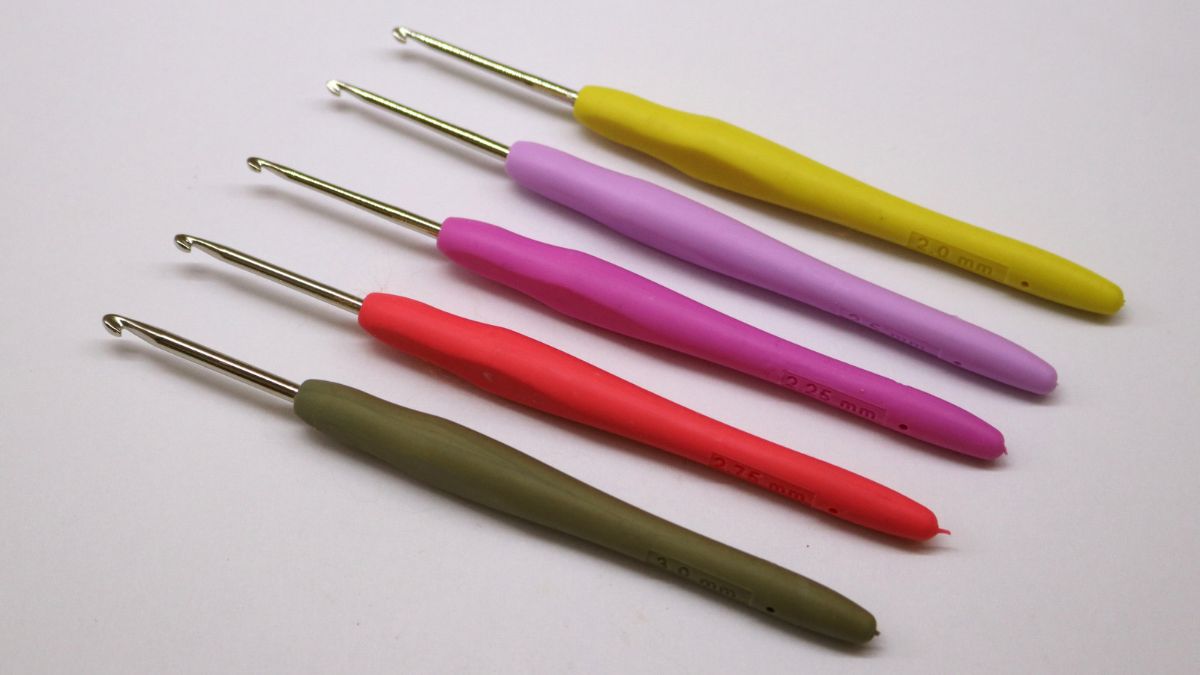
Look at the flat thumb rest in the middle of the hook. That’s where the size is stamped or printed. On ergonomic hooks like these, it’s usually molded right into the handle.
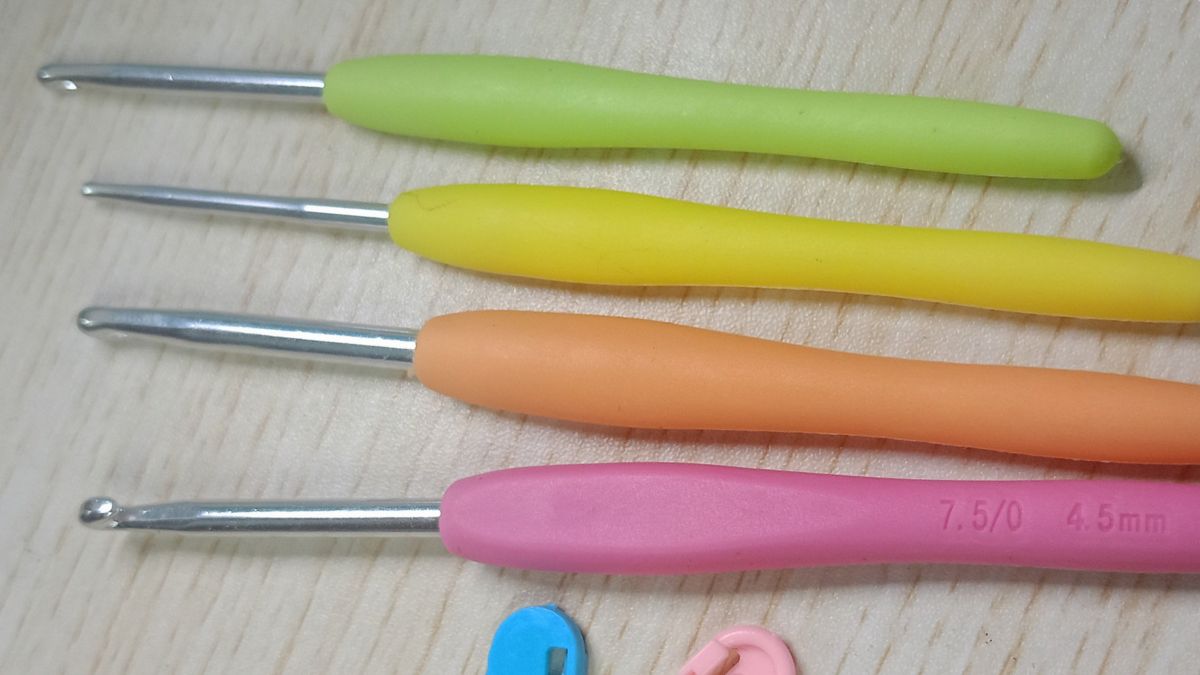
You might see two sizes printed side by side. On the pink hook below, 4.5mm is the metric size and 7.5/0 is the Japanese size. Japanese hooks use a “/0” system, and the number gets bigger as the hook gets bigger. If you see a “/0,” just look for the millimeters.
Size worn off? A hook gauge (a little ruler with holes in it, often sold with knitting needle gauges) will tell you. Slide the shaft of the hook, not the tip, into the smallest hole it fits.
Which crochet hook to use with each yarn weight
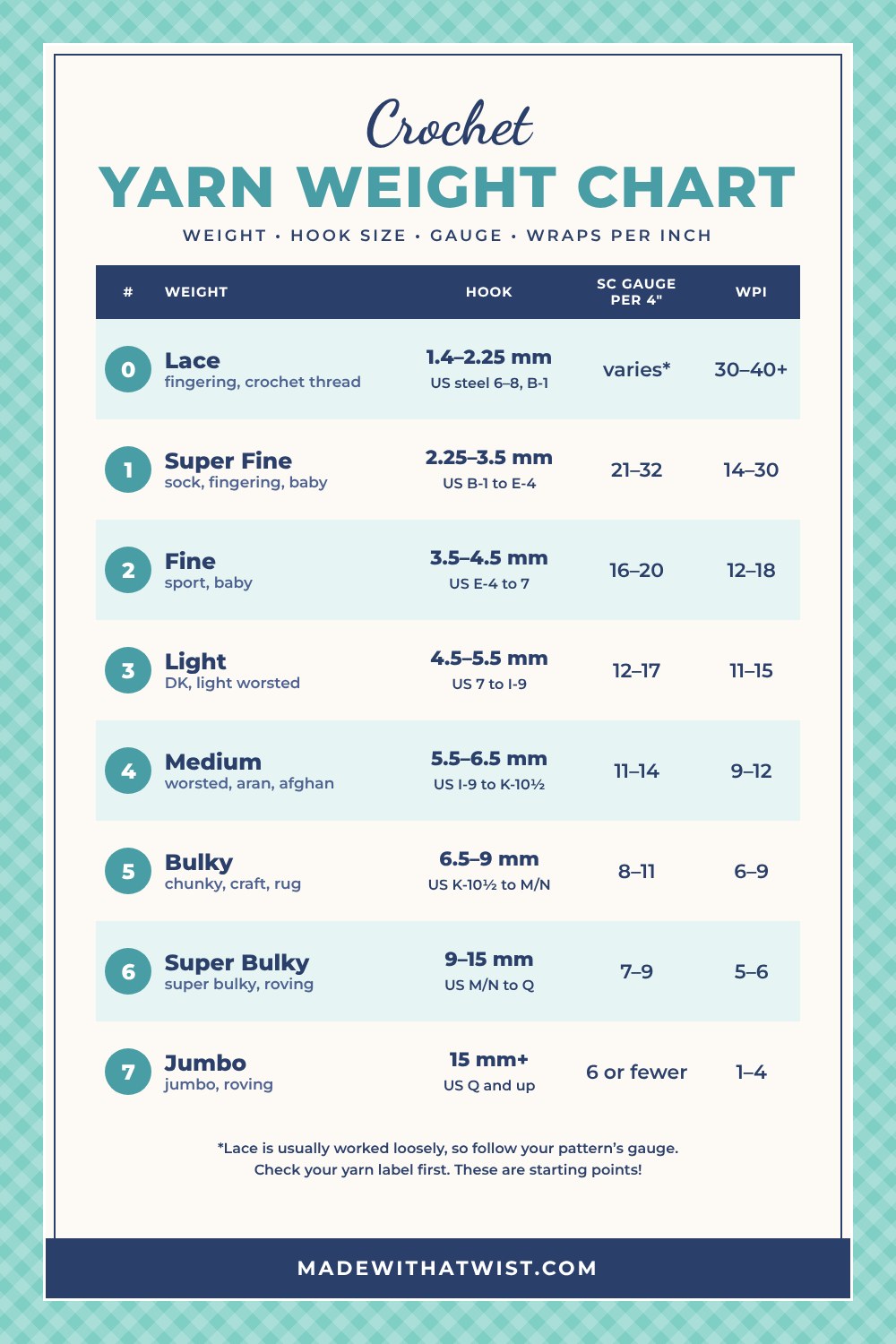
Your yarn label is your best friend here. Most labels show a recommended hook size, usually in a little hook icon. If yours doesn’t, use this chart from the Craft Yarn Council’s yarn weight system as your starting point.
| Yarn weight | Also called | Hook (metric) | Hook (US) |
|---|---|---|---|
| 0 Lace | lace, fingering, crochet thread | steel 1.6–1.4 mm, or regular 2.25 mm | steel 6–8, or B-1 |
| 1 Super Fine | sock, fingering, baby | 2.25–3.5 mm | B-1 to E-4 |
| 2 Fine | sport, baby | 3.5–4.5 mm | E-4 to 7 |
| 3 Light | DK, light worsted | 4.5–5.5 mm | 7 to I-9 |
| 4 Medium | worsted, afghan, aran | 5.5–6.5 mm | I-9 to K-10½ |
| 5 Bulky | chunky, craft, rug | 6.5–9 mm | K-10½ to M/N |
| 6 Super Bulky | super bulky, roving | 9–15 mm | M/N to Q |
| 7 Jumbo | jumbo, roving | 15 mm and larger | Q and larger |
Not sure what weight your yarn is? My yarn weight chart explains all eight weights and how to read a yarn label. These are starting points, not rules. Amigurumi uses a hook a size or two smaller than the label suggests so the stuffing doesn’t peek through. A drapey shawl might use a hook a size or two bigger.
Steel crochet hooks for thread
Steel hooks are the tiny ones used for crochet thread, doilies and fine lace. Like old UK sizes, steel hook numbers run backward: the higher the number, the smaller the hook. Steel sizes also vary a lot by brand, so check the millimeters. These are the sizes you’ll see most often:
| Metric | US steel size |
|---|---|
| 3.5 mm | 00 |
| 3.25 mm | 0 |
| 2.75 mm | 1 |
| 2.25 mm | 2 |
| 2.1 mm | 3 |
| 2 mm | 4 |
| 1.9 mm | 5 |
| 1.8 mm | 6 |
| 1.65 mm | 7 |
| 1.5 mm | 8 |
| 1.4 mm | 9 |
| 1.3 mm | 10 |
| 1.1 mm | 11 |
| 1 mm | 12 |
| 0.9 mm | 13 |
| 0.75 mm | 14 |
Crochet thread is numbered backward too: size 3 thread is thick and size 100 is the finest. Size 10 is the most common, and it usually pairs with a steel 7 (1.65 mm) hook.
Inline vs. tapered hooks
Two hooks can be the same size and still feel completely different in your hand. The biggest difference is the shape of the head:
- Inline hooks (Susan Bates is the classic example) have a head that’s the same width as the shaft, with a deep, sharp-cornered throat. Many crocheters find they grab the yarn securely and make very even stitches.
- Tapered hooks (like Boye) have a rounder head that’s a little wider than the throat. They glide in and out of stitches easily, which a lot of people find faster.
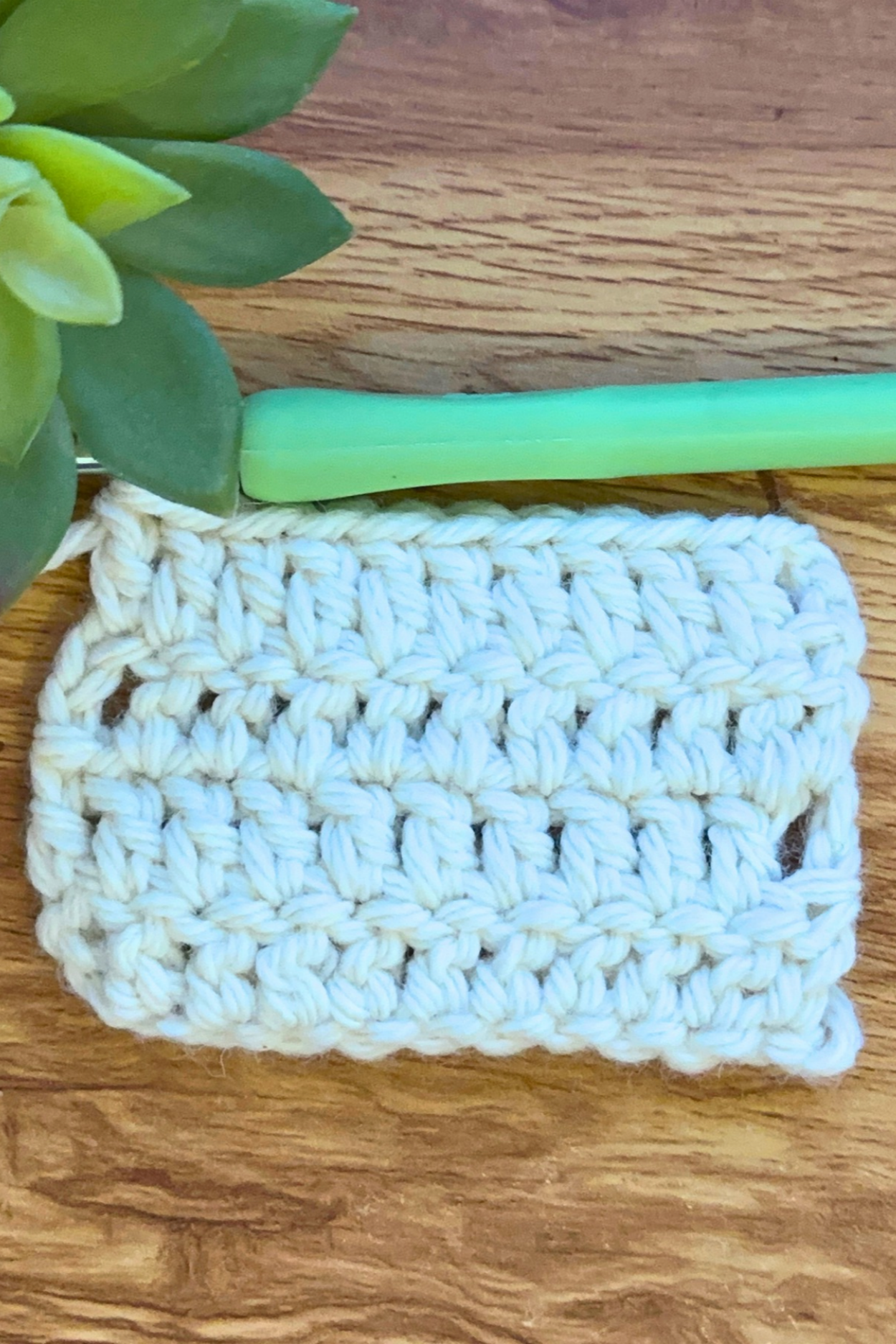
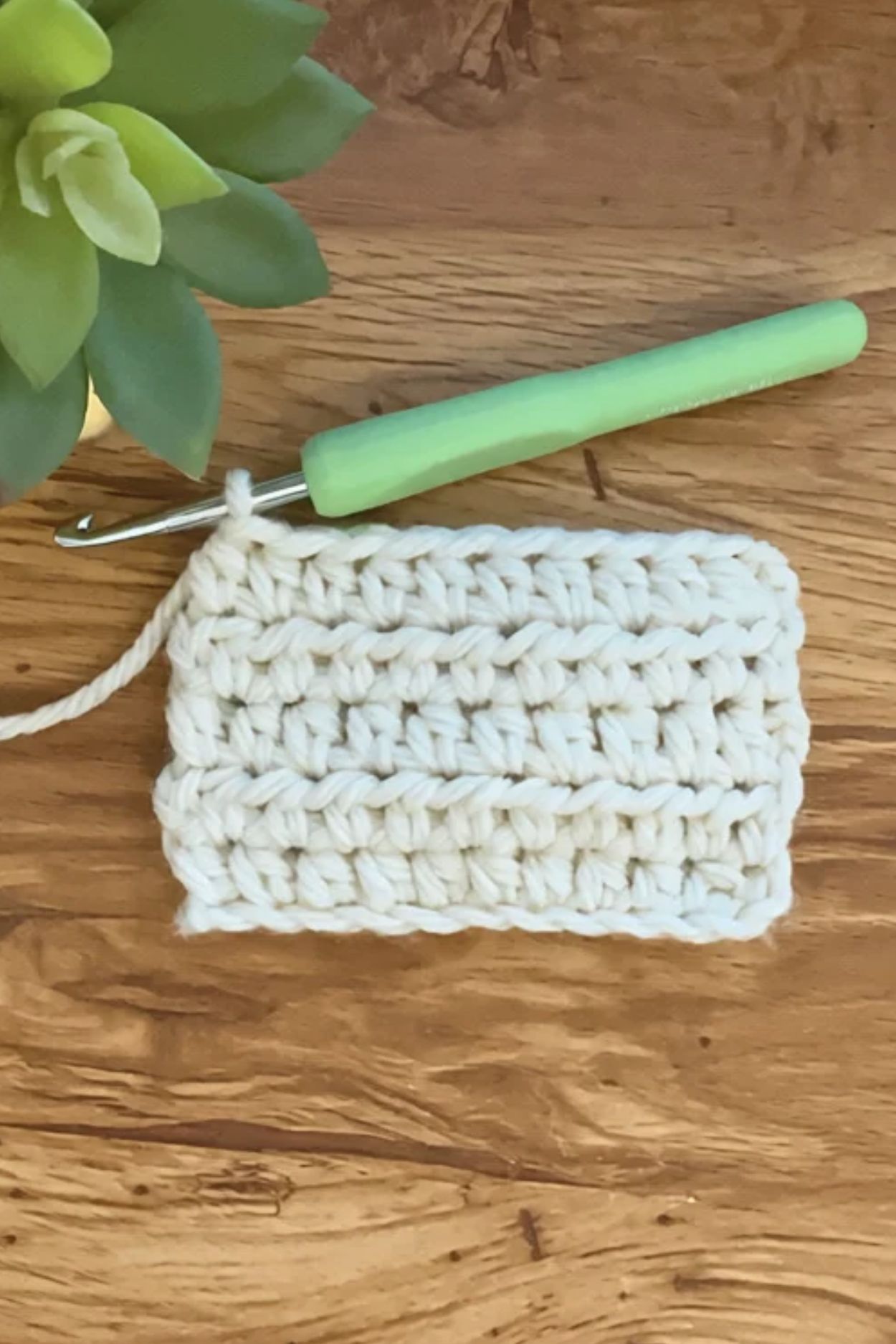
- Ergonomic hooks add a soft, thick handle (like the colorful hooks in the photos above). If your hand or wrist gets tired, they’re worth a try.
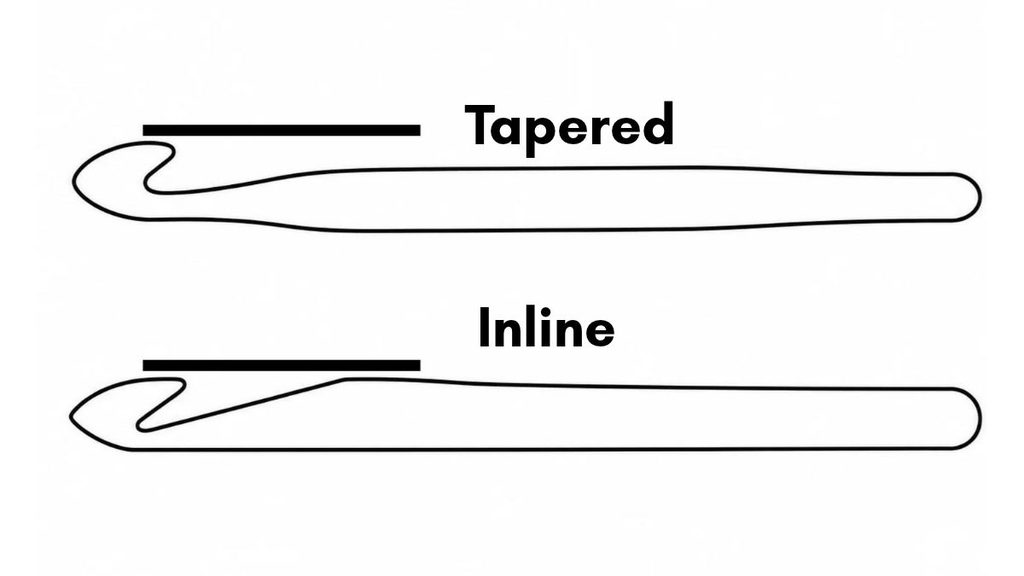
Neither shape is better. If you hold your hook like a pencil and you’re struggling, though, try the other style. It can make a surprising difference.
When to go up or down a hook size
The hook size in a pattern is the size the designer used to get gauge. Everyone crochets a little differently, so you may need a different hook to get the same result. Crochet a small swatch, then measure:
- Too many stitches per 4 inches? Your stitches are too small. Go up a hook size.
- Too few stitches per 4 inches? Your stitches are too big. Go down a hook size.
- Row gauge off but stitch gauge right? Often it’s how you work the stitch, not the hook. For hats, keep the stitch gauge and just add or skip a round.
Gauge matters most for things that need to fit, like hats, mittens and garments. For blankets, scarves and cowls, a little difference is usually fine.
Crochet hook size FAQ
What size crochet hook should a beginner start with?
A 5 mm (H-8) or 5.5 mm (I-9) hook with smooth, light-colored worsted weight yarn. It’s big enough to see your stitches and small enough to handle easily. Super bulky yarn with a 9 mm hook is also a fun, fast way to start, and it’s how a lot of people learn with my one-hour hats.
What does M/N mean on a crochet hook?
M/N is a 9 mm hook. Brands label this size M, N, M/N or M-13, so “M/N” covers them all. I use 9 mm (US M/N) in all my patterns.
What is the most common crochet hook size?
5 mm (H-8). It’s the go-to for worsted weight yarn, the most popular yarn weight in the US. 5.5 mm (I-9) and 6 mm (J-10) are close behind.
Is a bigger number a bigger hook?
For US letters and numbers and Japanese sizes, yes. For steel hooks and old UK/Canadian sizes, no: the bigger the number, the smaller the hook. When in doubt, check the millimeters.
Can I use a different hook than the pattern says?
Absolutely. The pattern’s hook is a suggestion to help you match gauge. If your swatch matches the pattern’s gauge with a different hook, use that one.
Find a pattern for your hook
- Chunky crochet hats, mostly super bulky yarn with a 9 mm (US M/N) or 10 mm (US N/P-15) hook
- Super bulky cowl and scarf patterns for your biggest hooks
- All free crochet patterns
Keep learning
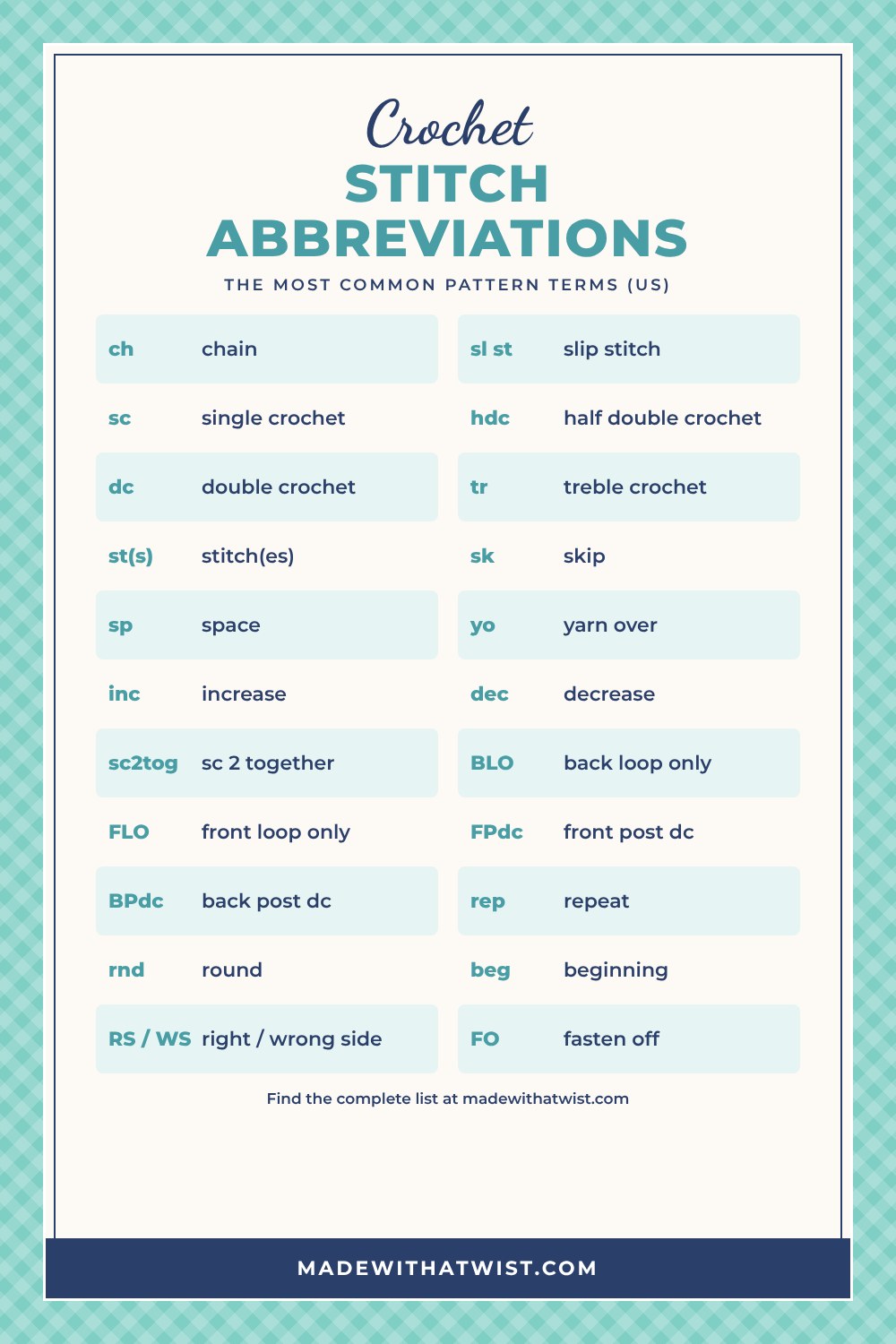
- Crochet Abbreviations: Complete List for Beginners (US Terms)
- How to Crochet a Chain (and Count Your Foundation Chain)
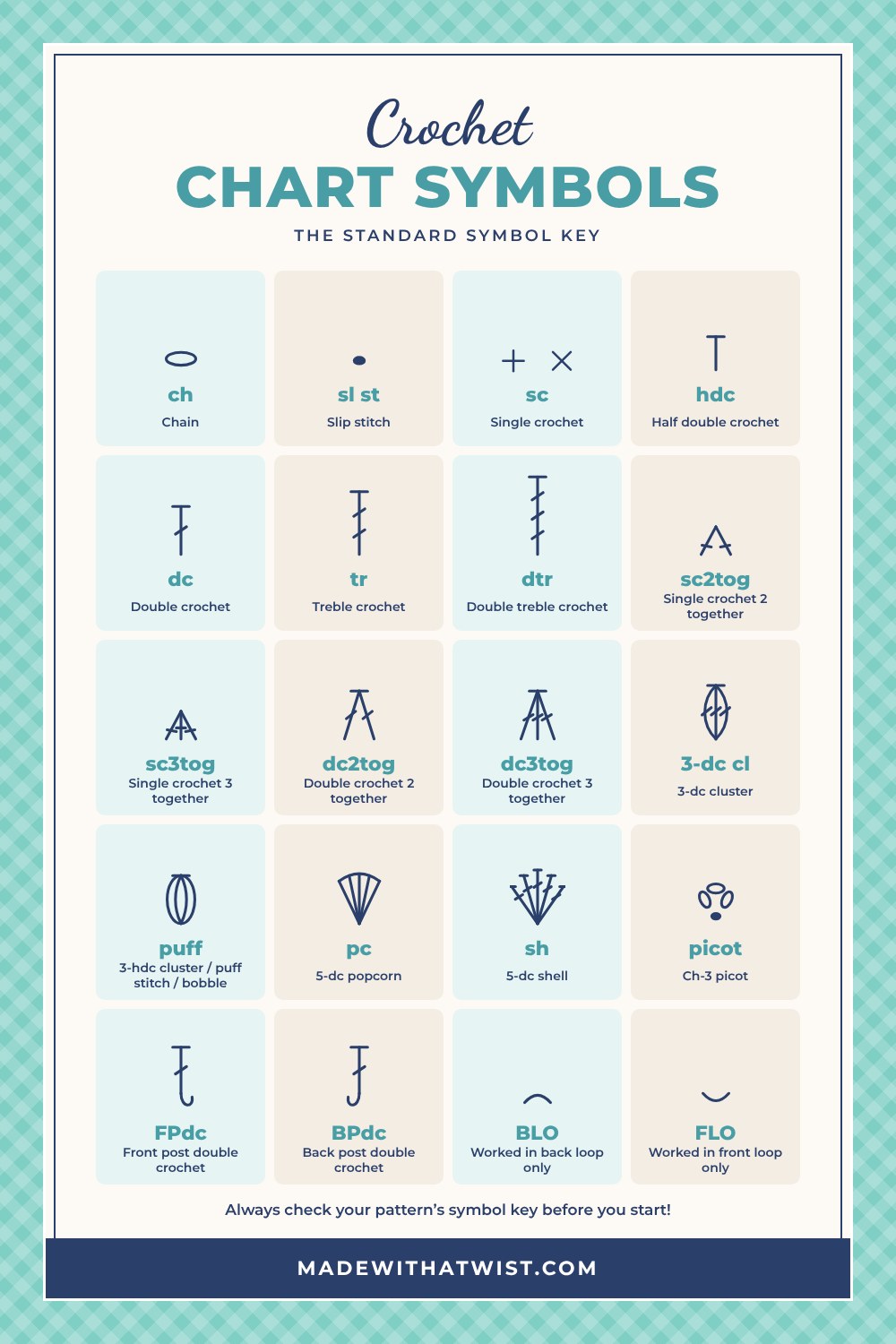
- Crochet Chart Symbols: How to Read a Crochet Chart
- Crochet Skill Levels Explained: Beginner to Experienced