Welcome to the Made with a Twist Crochet Stitch Library! This is your home base for every stitch tutorial on the blog, with step-by-step photos, the US and UK names, the chart symbol and the common mistakes to watch for.
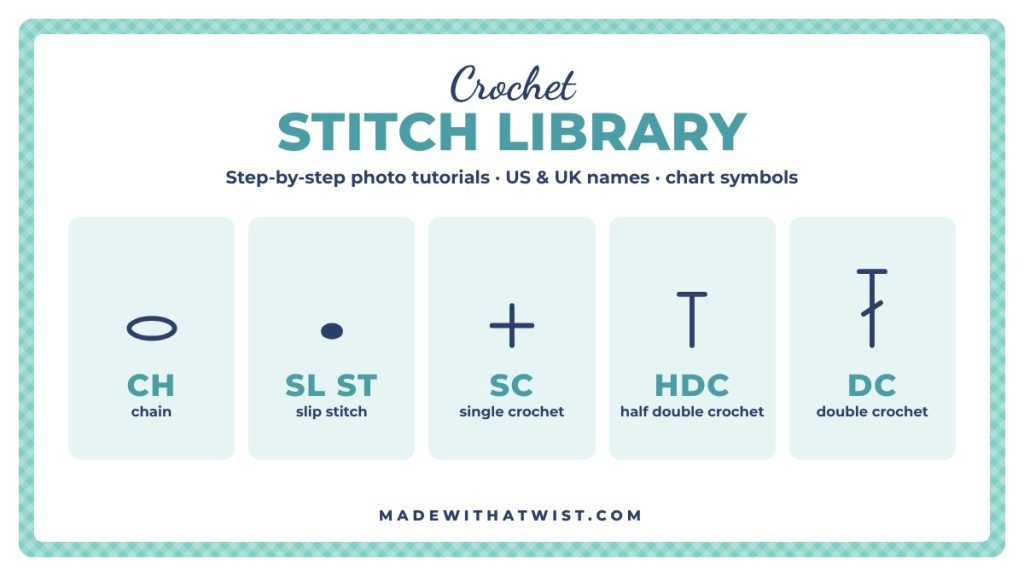
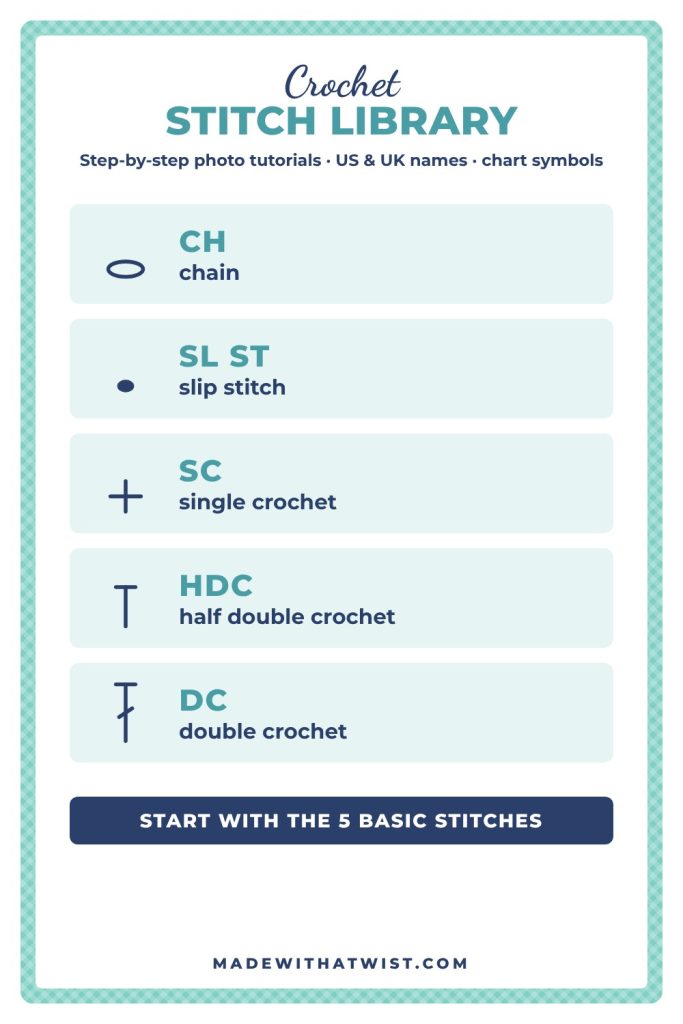
New to crochet? Work through the five basic stitches below in order. Each one builds on the one before it, and together they’re all you need for most of the patterns on this site. Already crocheting? Use the quick reference table to look up a stitch fast.
- The 5 basic crochet stitches
- Quick reference: heights, turning chains and symbols
- US vs UK stitch names
- Which stitch should I use?
- Coming soon to the library

The 5 basic crochet stitches
Start with the chain and work your way across. The photos in every tutorial use the same cream yarn and green hook, so it’s easy to compare stitches side by side.
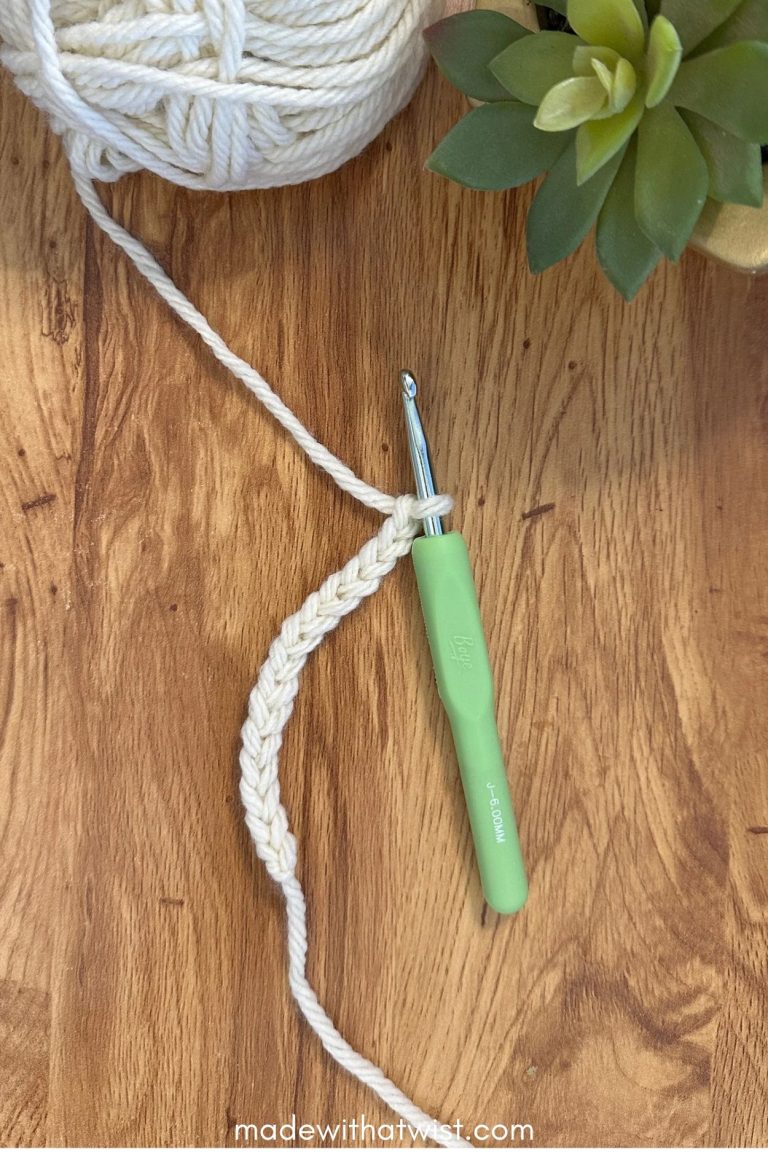
How to Crochet a Chain (ch)
US: chain (ch) · UK: chain (ch)
Where almost every project begins. Learn to make an even chain and count your foundation chain correctly.
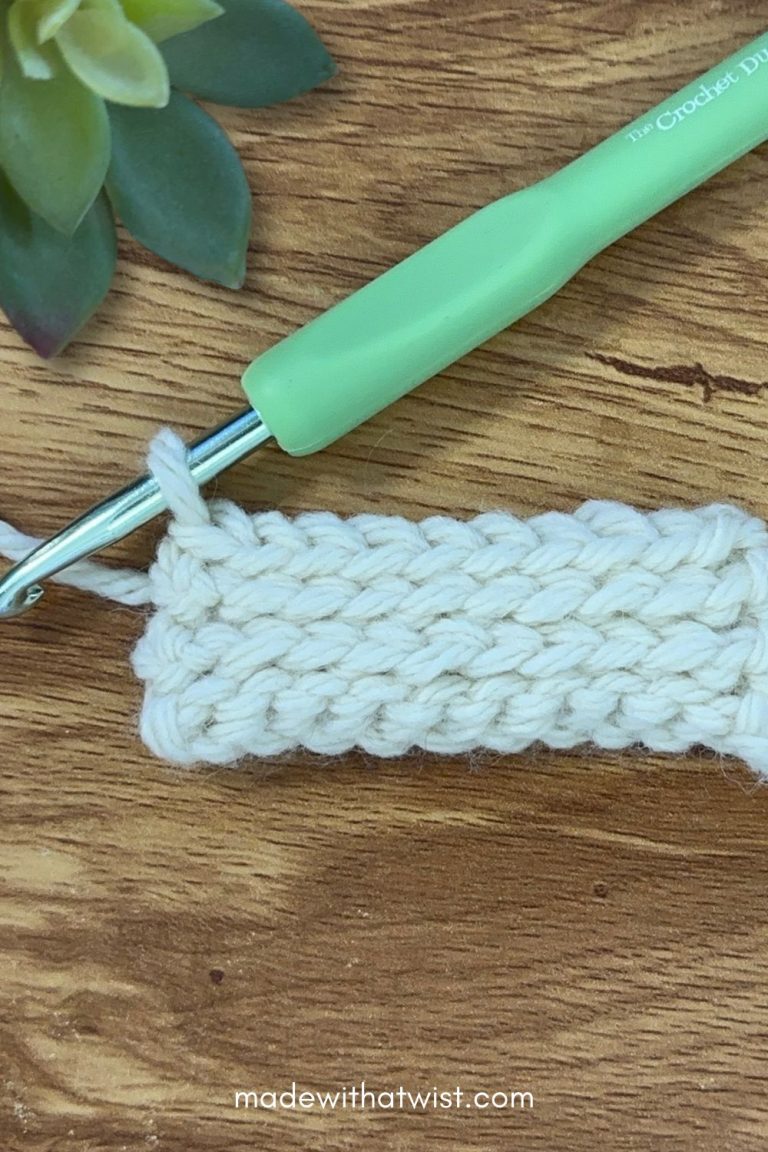
How to Slip Stitch (sl st)
US: slip stitch (sl st) · UK: slip stitch (ss)
The tiny stitch that joins rounds, moves your yarn without adding height and makes pretty surface details.
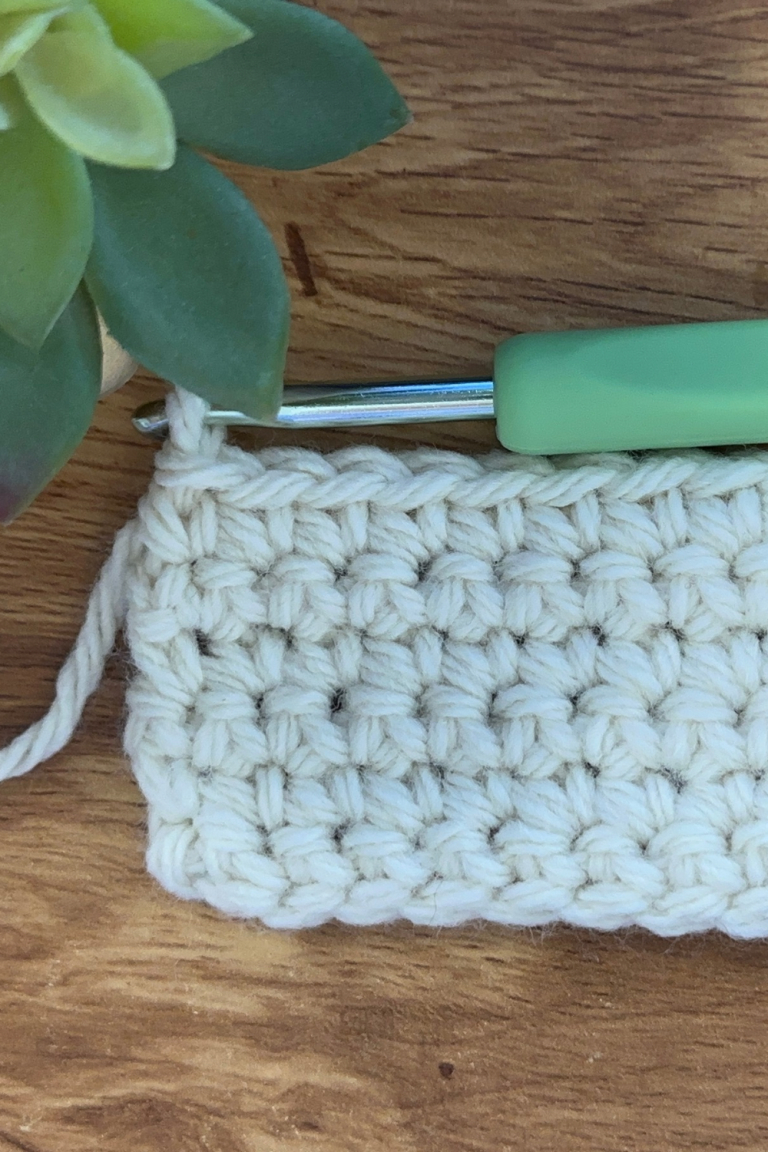
How to Single Crochet (sc)
US: single crochet (sc) · UK: double crochet (dc)
The short, sturdy stitch behind amigurumi, dishcloths and cozy hats. The first “real” stitch most of us learn.
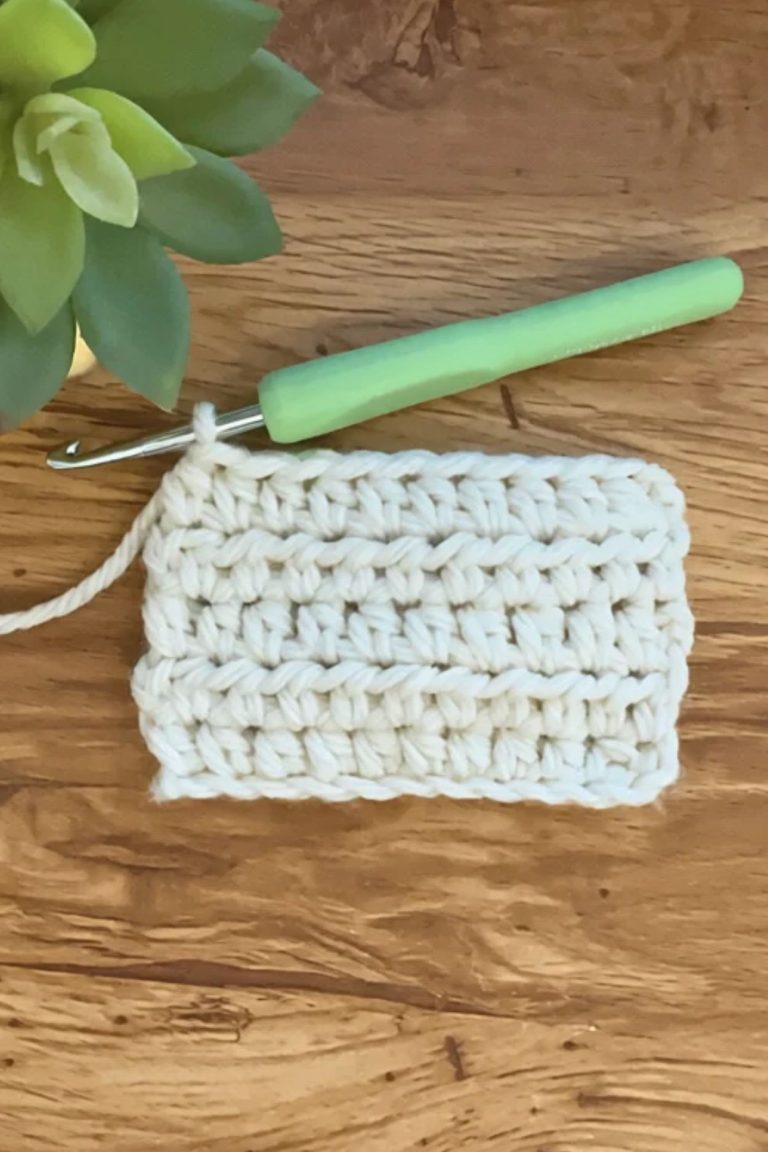
How to Half Double Crochet (hdc)
US: half double crochet (hdc) · UK: half treble crochet (htr)
Taller than single crochet but still solid and warm. Plus the “third loop” trick for a knit-look ridge.
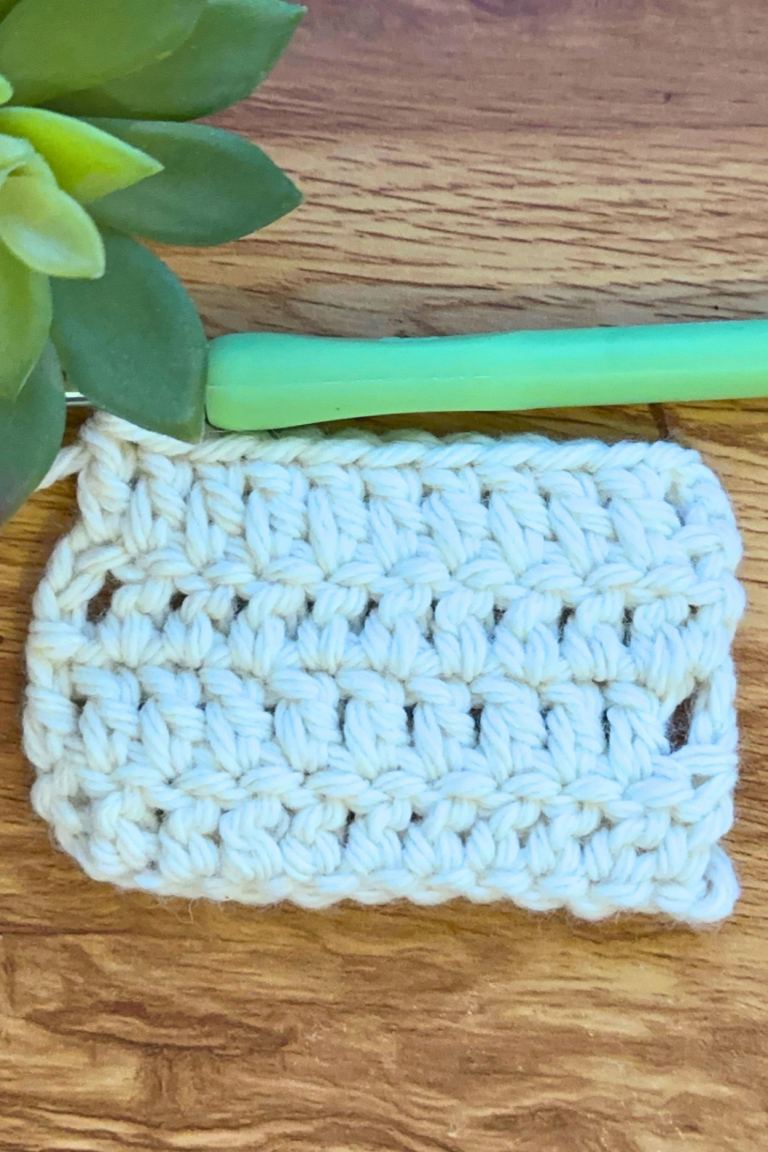
How to Double Crochet (dc)
US: double crochet (dc) · UK: treble crochet (tr)
The tall, speedy stitch behind granny squares, blankets and drapey scarves, with tips for keeping your edges straight.
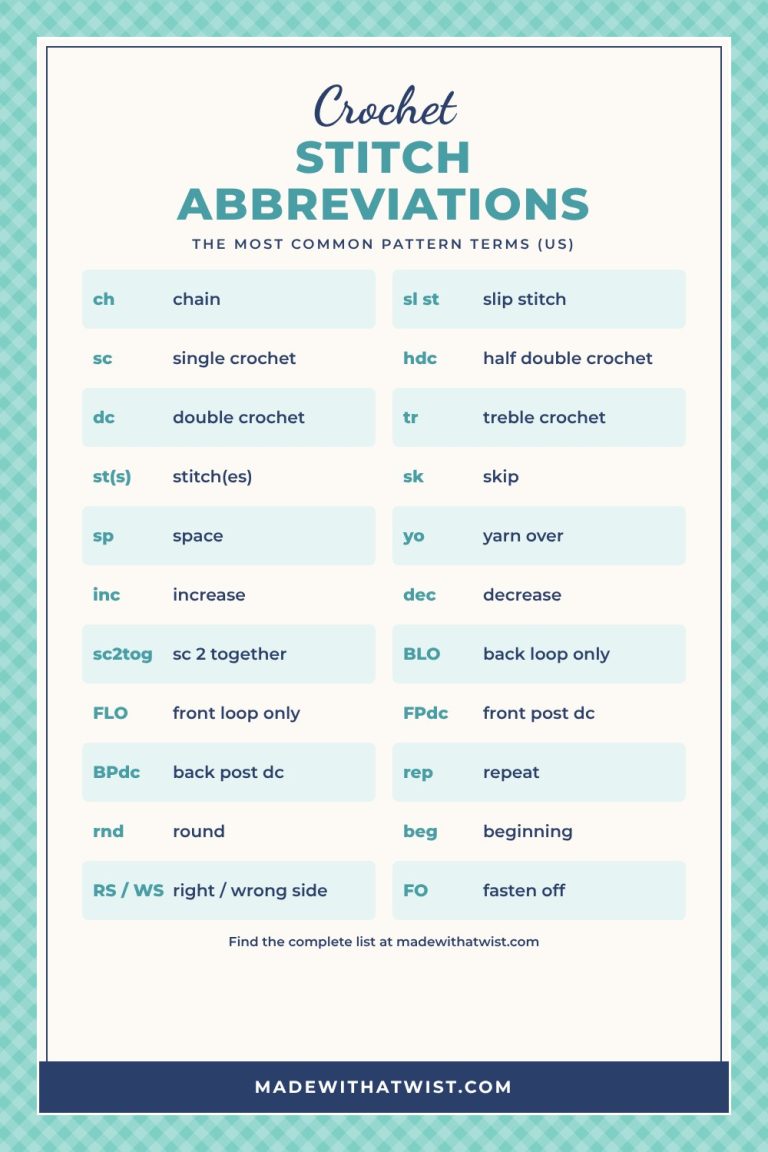
Crochet Abbreviations
Every abbreviation you’ll see in a pattern, in one list. Each stitch links to its tutorial as the library grows.
Quick reference: heights, turning chains and symbols
Here are the basic stitches at a glance. The symbol is how each stitch is drawn on a crochet chart. You can see the full list on my crochet chart symbols page.
| Stitch (US) | Symbol | Height | Turning chain | UK name |
|---|---|---|---|---|
| Chain (ch) | Flat | — | Chain (ch) | |
| Slip stitch (sl st) | Almost none | — | Slip stitch (ss) | |
| Single crochet (sc) | Short | ch 1, doesn’t count | Double crochet (dc) | |
| Half double crochet (hdc) | Medium | ch 2, usually doesn’t count | Half treble crochet (htr) | |
| Double crochet (dc) | Tall | ch 3, usually counts | Treble crochet (tr) |
US vs UK stitch names
Here’s the one that trips everybody up: the same stitch has a different name in US and UK patterns. A UK “double crochet” is a US single crochet! All of my patterns use US terms.
| US term | UK term |
|---|---|
| Chain (ch) | Chain (ch) |
| Slip stitch (sl st) | Slip stitch (ss) |
| Single crochet (sc) | Double crochet (dc) |
| Half double crochet (hdc) | Half treble crochet (htr) |
| Double crochet (dc) | Treble crochet (tr) |
| Treble crochet (tr) | Double treble crochet (dtr) |
Tip: If a pattern never mentions single crochet but uses lots of “dc” and “htr,” it’s probably written in UK terms.
Which stitch should I use?
- Want a dense, sturdy fabric? Single crochet. It’s great for amigurumi, baskets, bags and dishcloths.
- Want warm but quicker? Half double crochet. It’s my favorite for hats, cowls and cozy blankets.
- Want drape and speed? Double crochet. It works up fast for blankets, shawls and granny squares.
- Need to join a round or move your yarn? Slip stitch.
- Not sure where to start? Check the skill level on a pattern, and pick one marked Beginner or Easy.
Coming soon to the library
I’m adding new tutorials all the time, starting with the stitches that show up most in my patterns:
- Increases and decreases (sc2tog, hdc2tog, dc2tog and more)
- Magic ring
- Front post and back post double crochet
- Back loop only, front loop only and the third loop
- Shells, bobbles and puff stitches
Want to know when a new tutorial goes live? Grab the free Crocheter’s Reference Guide below and you’ll be the first to hear.
Keep learning
- Crochet Abbreviations: Complete List for Beginners (US Terms)
- Crochet Chart Symbols
- Crochet Hook Size Chart
- Crochet Yarn Weight Chart
- Crochet Skill Levels
- Crochet Hat Size Chart and Calculator
- Crochet Reference Library
Save this Page to Your Favorite Pinterest Board