How to Single Crochet (sc): Step-by-Step for Beginners
If you know how to chain, you’re one stitch away from making real crochet fabric. Single crochet is the shortest, tightest and most-used stitch in crochet, and it shows up in almost every pattern I write: brims, amigurumi, baskets, edgings and those squishy super bulky cowls.
It’s also the stitch where most beginners first get frustrated. Edges start wandering, the stitch count creeps up or down, and suddenly your neat rectangle looks like a trapezoid. (We’ve all been there!) In this tutorial I’ll walk you through:
- How to single crochet into a foundation chain, step by step
- How to work the next rows (and keep your edges straight)
- How to count single crochet stitches
- How to single crochet in the round
- The most common single crochet mistakes and how to fix them
- Single crochet variations you’ll see in patterns
Grab your yarn and hook and let’s make some stitches together.


What is single crochet?
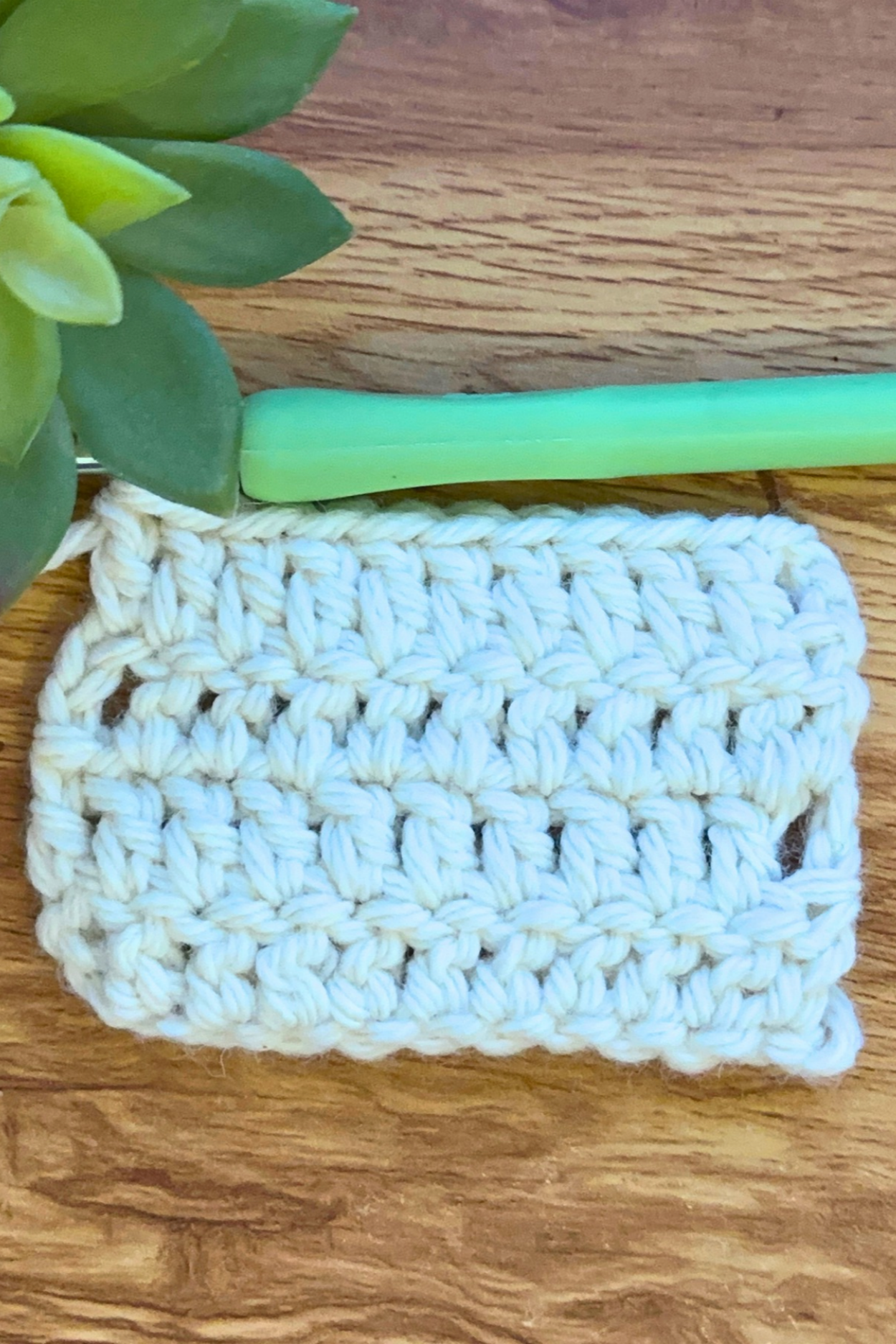
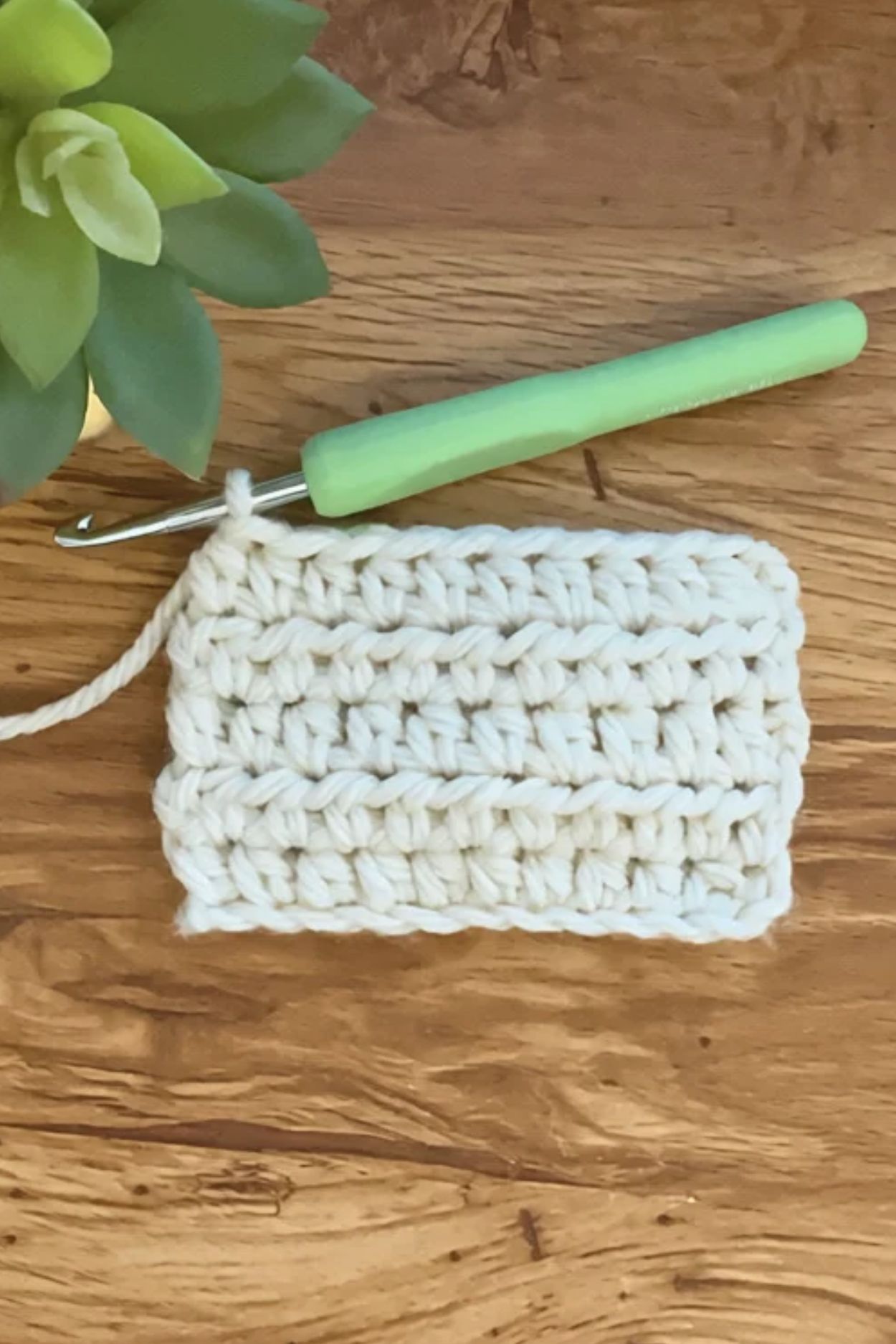
Single crochet (abbreviated sc) is a short, sturdy stitch that makes a dense fabric with tiny gaps. It’s the stitch you use when you want something firm, warm or structured. In US terms it’s called single crochet; in UK patterns the same stitch is called double crochet (dc). On a crochet chart, single crochet is drawn as a plus sign (+) or an X. You can see all the symbols on my crochet chart symbols page.

What you’ll need
- Yarn: a smooth, light-colored worsted weight (#4) yarn is easiest for learning, because you can see every stitch. My yarn weight chart explains the weights.
- Crochet hook: the size recommended on your yarn label, usually 5 mm (US H-8) for worsted weight. Not sure what your hook is? Check my hook size chart.
- A stitch marker (or a scrap of contrasting yarn) to mark your first stitch. Optional, but it makes counting so much easier.
- Scissors
How to single crochet, step by step
Start with a foundation chain. For practice, chain 16. (Need a refresher? Here’s my chain tutorial.)
Step 1: Insert your hook into the 2nd chain from the hook
Skip the loop on your hook and the first chain next to it. Insert your hook into the second chain from the hook. The chain you skipped acts as your turning chain, so it doesn’t count as a stitch.

Tip: For the neatest bottom edge, insert your hook under the back bump of the chain. Going under the top loop is fine too, and a little easier when you’re brand new.
Step 2: Yarn over
Wrap the yarn over your hook from back to front.

Step 3: Pull up a loop
Pull the yarn through the chain. You now have 2 loops on your hook.

Step 4: Yarn over again

Step 5: Pull through both loops
Pull the yarn through both loops on your hook. That’s one single crochet! You’re back to 1 loop on your hook.

Step 6: Repeat across the chain
Single crochet in each chain across. If you started with 11 chains, you’ll have 10 single crochet at the end of the row.

How to work the next rows
Turn and chain 1
Turn your work so the yarn and hook are back on the right (or on the left if you crochet left-handed). Chain 1. This turning chain lifts your yarn up to the height of the new row. In most patterns, including mine, the chain 1 for single crochet does not count as a stitch.

Single crochet in the first stitch
Your first single crochet goes into the very first stitch, right at the base of the chain 1. Skipping this stitch is the number one reason edges slant inward.

Work under both loops
Look at the top of each stitch and you’ll see a little V. Insert your hook under both loops of the V (unless your pattern says otherwise), then work a single crochet just like before.
Don’t miss the last stitch
The last stitch of a row likes to hide. It’s small and tucked against the turning chain from the row before. Work into the top of that last single crochet, but not into the turning chain itself.

How to count single crochet stitches
Count the Vs along the top of the row. Each V is one stitch. Don’t count the turning chain or the loop on your hook.
- Place a marker in the first stitch of each row. When you get to the end, you’ll know exactly where the last stitch is.
- Count every few rows while you’re learning. It’s much easier to fix one row than ten.
- Your count should stay the same every row unless the pattern tells you to increase or decrease.

How to single crochet in the round
Hats, amigurumi and baskets are often worked in rounds instead of rows. The stitch is exactly the same; you just don’t turn.
- Start with a magic ring (or chain 2 and work into the 2nd chain from the hook), then work 6 single crochet into the ring and pull it closed.
- Joined rounds: slip stitch to the first stitch, chain 1, and start the next round. You’ll see a small seam.
- Spiral rounds: don’t join; just keep going into the first stitch of the last round. This is common in amigurumi. Use a stitch marker to mark the start of each round.
Common single crochet mistakes (and how to fix them)
| Problem | Usually caused by | Try this |
|---|---|---|
| Edges slant inward | Skipping the first or last stitch | Work into the first stitch at the base of the chain 1, and find that sneaky last stitch. |
| Edges slant outward | Working into the turning chain | Chain 1 doesn’t count as a stitch. Don’t work into it at the end of the row. |
| Stitch count keeps changing | Missing or adding stitches mid-row | Use a marker in the first stitch and count every row while you learn. |
| Fabric is stiff and hard to work into | Tension too tight | Relax your yarn hand, or go up a hook size. |
| Fabric is loose and holey | Tension too loose | Go down a hook size, or wrap the yarn once more around your finger. |
Single crochet variations you’ll see in patterns
- sc BLO (single crochet in the back loop only): makes stretchy ribbing, perfect for hat brims.
- sc FLO (front loop only): leaves the back loops free for a textured line or for adding a new round later.
- sc inc (single crochet increase): 2 single crochet in the same stitch.
- sc2tog (single crochet 2 together): a decrease that turns 2 stitches into 1.
- esc (extended single crochet): a slightly taller, softer single crochet.
- rsc (reverse single crochet or crab stitch): single crochet worked backward for a twisted, rope-like edge.
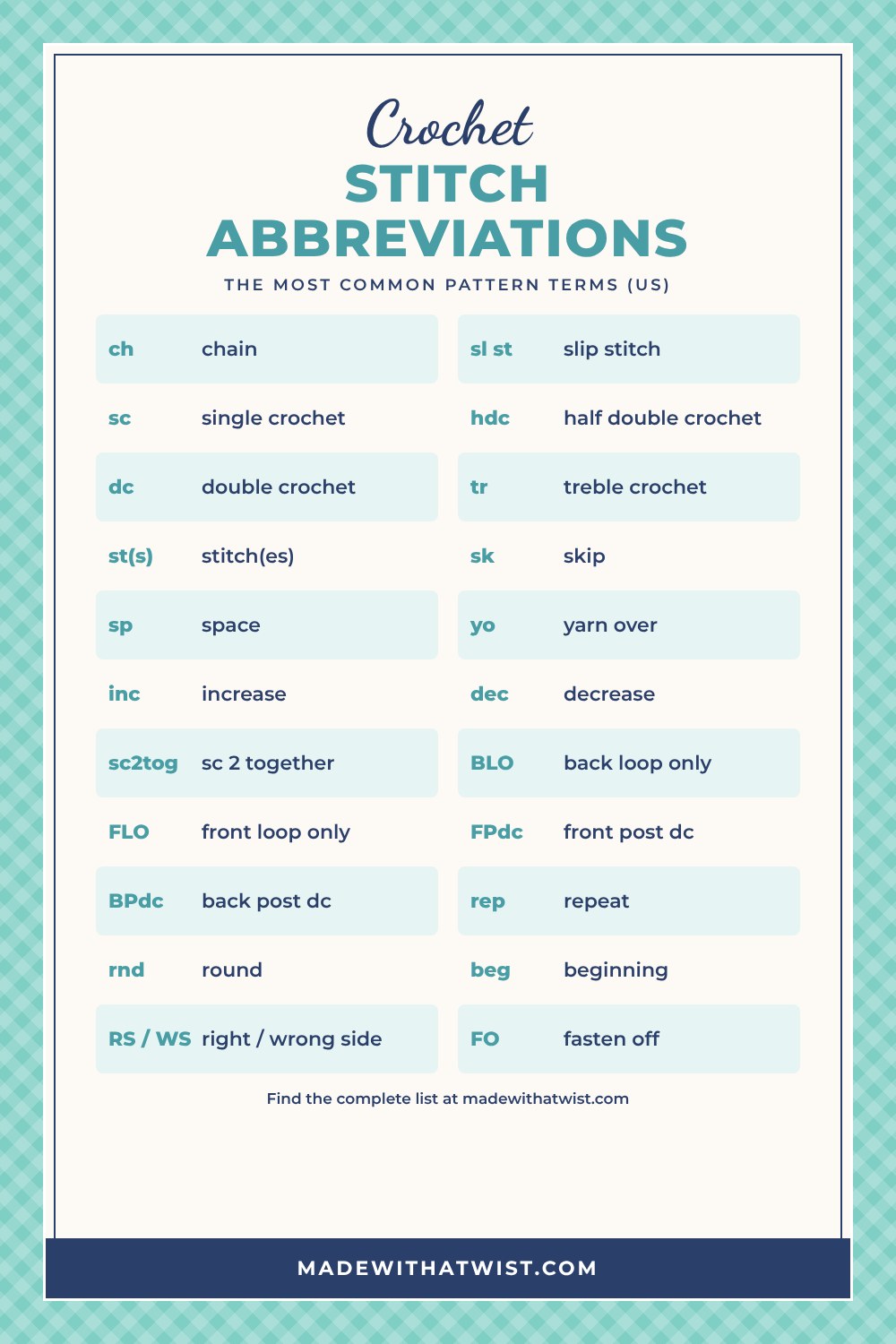
You’ll find all of these on my crochet abbreviations list.
Single crochet FAQ
Does the chain 1 count as a stitch in single crochet?
Usually no. In most patterns (including all of mine), the chain 1 at the start of a single crochet row is just a turning chain and you work your first single crochet into the first stitch. If a pattern says “ch 1 counts as sc,” follow the pattern.
How many chains do I need for a row of single crochet?
Chain one more than the number of single crochet you want. For 20 single crochet, chain 21 and start in the 2nd chain from the hook.
What’s the difference between single crochet and half double crochet?
Half double crochet adds a yarn over before you insert your hook, so it’s a little taller and looser. Single crochet is the shortest of the basic stitches (after the slip stitch).
Why is my single crochet so tight?
Almost everyone crochets tight at first! Try loosening your grip on the yarn, pulling your loops up a bit taller, or going up a hook size.
Is single crochet the same in UK patterns?
The stitch is the same, but the name isn’t. UK patterns call it double crochet (dc). If a pattern never mentions single crochet, it’s probably in UK terms.
Ready to practice?
These patterns use lots of single crochet and are great next projects:
- Homebody Shawl (Beginner)
- Amigurumi Seal Pup (Beginner, worked in the round)
- Whispering Pines Unisex Beanie (Easy)
- Crochet Clutch (Easy)
Not sure what level you’re ready for? Check out my guide to crochet skill levels.
Save this Pin to Your Favorite Pinterest Board

Keep learning
- How to Crochet a Chain (and Count Your Foundation Chain)
- How to Slip Stitch in Crochet (sl st)
- How to Half Double Crochet (hdc)
- How to Double Crochet (dc)
- Crochet Stitch Library: All the Stitch Tutorials
- Crochet Abbreviations: Complete List for Beginners (US Terms)
- Crochet Chart Symbols
- Crochet Reference Library