Crochet Yarn Weight Chart: Every Yarn Weight Explained
Worsted, aran, DK, chunky, super bulky, #4, #6, 10-ply… yarn weight names are all over the place, and it can feel like every yarn company is speaking a different language. The good news: there are really only eight yarn weights, numbered 0 to 7, and once you know them you can pick the right yarn (and the right hook) for any pattern.
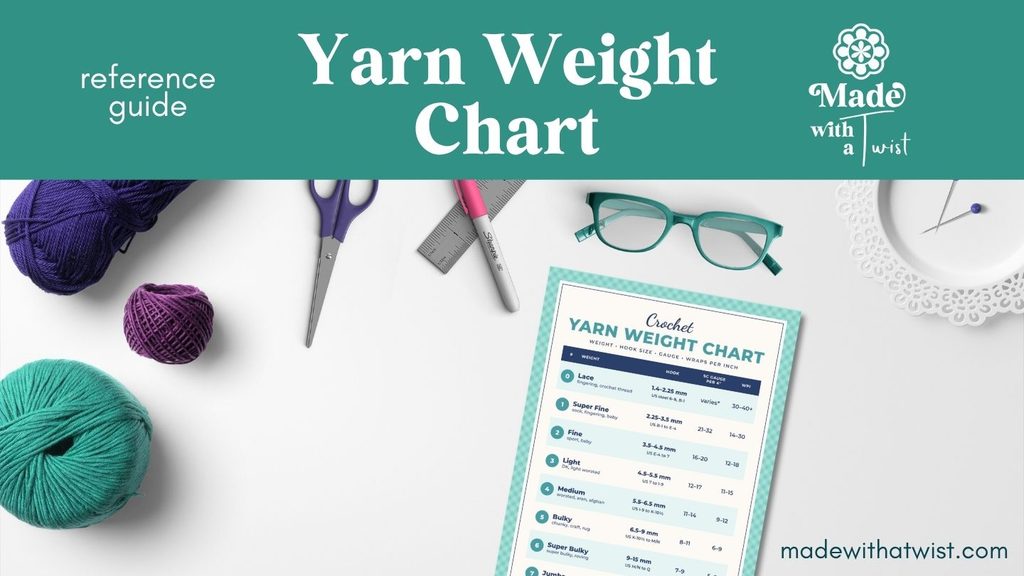
This crochet yarn weight chart shows all eight with their common names, the hook size to start with, typical single crochet gauge and wraps per inch. Below it, I’ll walk you through reading a yarn label, figuring out the weight of a mystery yarn, and substituting one yarn for another.
Jump to a section
- Crochet yarn weight chart
- What “yarn weight” actually means
- How to read a yarn label
- Each yarn weight explained
- How to find the weight of a mystery yarn
- How to substitute yarn in a pattern
- US vs. UK and Australian yarn names
- Yarn weight FAQ
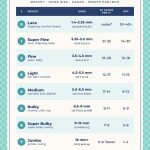
Crochet yarn weight chart
These numbers come from the Craft Yarn Council’s Standard Yarn Weight System, the same system behind the little numbered skein symbol on most yarn labels.
| Weight | Also called | Single crochet per 4″ | Hook to start with | Wraps per inch |
|---|---|---|---|---|
| 0 Lace | fingering, crochet thread | varies (lace is worked loosely) | 1.4–2.25 mm (US steel 6–8, B-1) | 30–40+ |
| 1 Super Fine | sock, fingering, baby | 21–32 | 2.25–3.5 mm (US B-1 to E-4) | 14–30 |
| 2 Fine | sport, baby | 16–20 | 3.5–4.5 mm (US E-4 to 7) | 12–18 |
| 3 Light | DK, light worsted | 12–17 | 4.5–5.5 mm (US 7 to I-9) | 11–15 |
| 4 Medium | worsted, aran, afghan | 11–14 | 5.5–6.5 mm (US I-9 to K-10½) | 9–12 |
| 5 Bulky | chunky, craft, rug | 8–11 | 6.5–9 mm (US K-10½ to M/N) | 6–9 |
| 6 Super Bulky | super bulky, roving | 7–9 | 9–15 mm (US M/N to Q) | 5–6 |
| 7 Jumbo | jumbo, roving | 6 or fewer | 15 mm+ (US Q and up) | 1–4 |
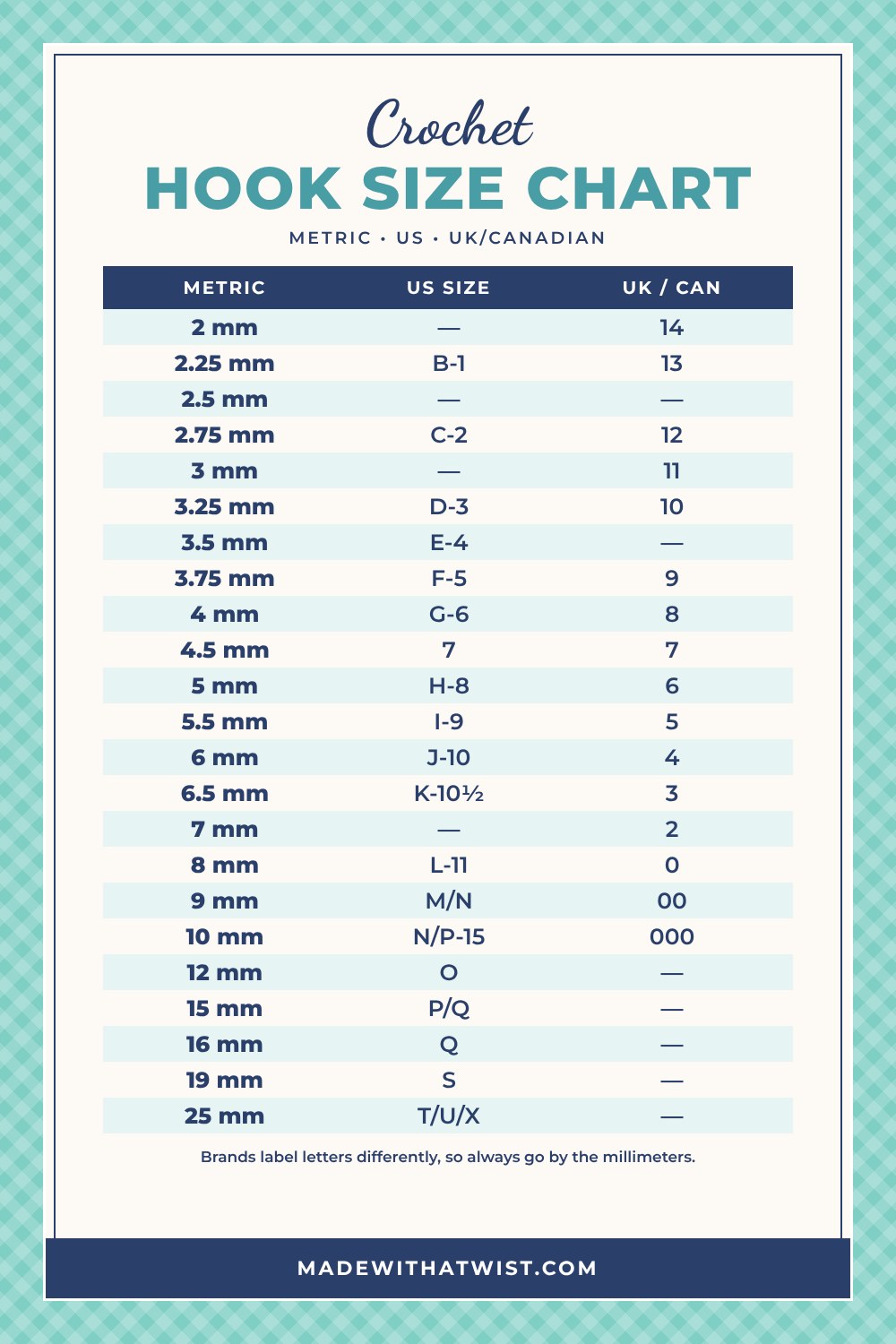
Need to convert a hook size? My crochet hook size chart has metric, US and UK sizes side by side.
What “yarn weight” actually means
Here’s the confusing part: yarn weight has nothing to do with how much a skein weighs. It describes how thick the strand is. A 100 g skein of lace yarn and a 100 g skein of super bulky yarn weigh the same, but one is a fine thread and the other is as thick as your finger.
Thicker yarn needs a bigger hook and makes bigger stitches, so your project works up faster. Thinner yarn needs a smaller hook and gives you finer detail and drape. That’s why matching the yarn weight in a pattern matters so much: use a thicker yarn and your hat turns into a bucket, use a thinner one and it won’t fit a toddler.
How to read a yarn label
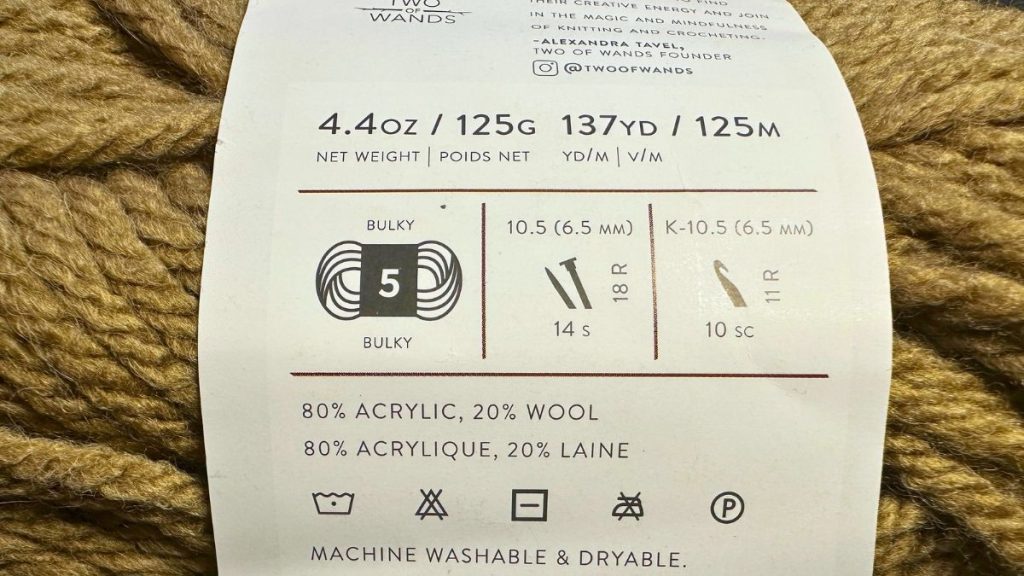
Almost everything you need is on the label (also called the ball band). Look for:
- The yarn weight symbol: a little skein with a number from 0 to 7 inside. This is the most reliable way to know the weight, because names like “chunky” mean different things to different brands.
- The hook (and needle) icons: the suggested hook size and gauge, often shown as a little square grid with the number of stitches and rows in 4 inches (10 cm).
- Length and weight: yards and meters, grams and ounces. When you’re buying yarn for a pattern, go by yards, not grams. Two yarns with the same weight number can have very different yardage per skein.
- Fiber content: acrylic, cotton, wool, blends. Fiber changes how the yarn stretches, drapes and washes.
- Care symbols and the dye lot. Buy all the skeins for one project from the same dye lot so the color matches.
Each yarn weight explained
0 Lace (fingering, crochet thread)
Very fine thread and lace yarns for doilies, delicate shawls and lacy edgings. Usually worked with a steel hook, and often worked loosely for an open, airy look. Hook: 1.4–2.25 mm (US steel 6–8, B-1).
1 Super Fine (sock, fingering, baby)
Thin yarns for socks, baby clothes, lightweight shawls and colorwork. Projects take a while, but the results are light and detailed. Hook: 2.25–3.5 mm (US B-1 to E-4).
2 Fine (sport, baby)
A little thicker than fingering. Great for baby blankets, lightweight sweaters and accessories with nice drape. Hook: 3.5–4.5 mm (US E-4 to 7).
3 Light (DK, light worsted)
DK (short for “double knitting”) is a favorite for garments, baby items and amigurumi. Lighter than worsted, but still works up at a good pace. Hook: 4.5–5.5 mm (US 7 to I-9).
4 Medium (worsted, aran, afghan)
The most popular yarn weight in the US and the easiest to find. Worsted and aran are both #4 (aran is a touch thicker). Perfect for blankets, hats, dishcloths, amigurumi and pretty much everything. If you’re learning to crochet, start here. Hook: 5.5–6.5 mm (US I-9 to K-10½).
5 Bulky (chunky, craft, rug)
Thick and cozy. Bulky yarn (often called chunky) is great for quick hats, cowls, scarves and blankets that need to be warm. Hook: 6.5–9 mm (US K-10½ to M/N).
6 Super Bulky (super bulky, roving)
My favorite! Super bulky yarn and a big hook make one-hour hats, cowls and scarves that are perfect for gifts and craft fairs. Most of my chunky hat patterns use #6 yarn. Hook: 9–15 mm (US M/N to Q).
7 Jumbo (jumbo, roving)
Extra-thick yarns for arm crochet, giant blankets and chunky home decor. Use a jumbo hook (15 mm and up), or just your hands. Hook: 15 mm+ (US Q and up).
How to find the weight of a mystery yarn
Lost the label? Inherited a bag of yarn from a friend? Use wraps per inch (WPI):
- Wrap the yarn around a pencil or ruler for a few inches. Keep the wraps snug and side by side, with no gaps and no overlapping, but don’t stretch the yarn.
- Count how many wraps fit in one inch. Count in a couple of spots and take the average.
- Match your number to the “Wraps per inch” column in the chart above.
WPI depends on how tightly you wrap, so treat it as a good guess, then crochet a small swatch to confirm.
How to substitute yarn in a pattern
You don’t have to use the exact yarn in a pattern. Here’s how to swap it successfully:
- Match the weight number first. If the pattern uses a #6 super bulky, choose another #6.
- Buy by yardage, not skeins. Multiply the yards per skein in the pattern by the number of skeins, then divide by the yards per skein of your yarn. Round up!
- Think about fiber. Cotton has little stretch (great for dishcloths, not ideal for a snug hat brim). Wool and acrylic are stretchier and warmer.
- Make a gauge swatch. Even yarns with the same weight number vary a bit. If your swatch doesn’t match, change your hook size.
Holding strands together: two strands of worsted (#4) held together crochet up roughly like a bulky (#5), and two strands of bulky come close to super bulky (#6). It’s a handy trick for using up stash, but always swatch to check.
US vs. UK and Australian yarn names
If you’re using a pattern from the UK, Australia or New Zealand, the names change. These are the closest matches:
| US | UK | Australia / NZ |
|---|---|---|
| 1 Super Fine: fingering | 4-ply | 4-ply |
| 2 Fine: sport | 5-ply (sport) | 5-ply |
| 3 Light: DK | DK (double knitting) | 8-ply |
| 4 Medium: worsted / aran | aran | 10-ply |
| 5 Bulky | chunky | 12-ply |
| 6 Super Bulky | super chunky | super chunky |
“Ply” in these names is a size label, not a count of strands, so a modern 8-ply yarn might have only two or three plies. When in doubt, check the WPI or the weight symbol.
Yarn weight FAQ
Is worsted the same as aran?
Close, but not quite. Both are #4 Medium, and they’re often interchangeable, but aran is slightly thicker than worsted. If your pattern uses one and you have the other, make a swatch and adjust your hook if needed.
Is chunky yarn #5 or #6?
Officially, “chunky” is #5 Bulky and “super chunky” is #6 Super Bulky. But brands use these names loosely, so always check the number in the skein symbol on the label.
What is the most common yarn weight?
#4 Medium (worsted). It’s the easiest to find in craft stores, comes in the most colors, and works for almost any project.
What yarn weight is best for beginners?
A smooth, light-colored #4 worsted weight yarn with a 5 mm (H-8) or 5.5 mm (I-9) hook. You can see your stitches clearly, and it’s easy to handle. Super bulky (#6) is also beginner-friendly for quick, satisfying projects like my one-hour hats.
Can I use a different yarn weight than the pattern says?
You can, but your project will come out a different size. For something like a blanket, that might be fine. For anything that needs to fit, stick with the weight in the pattern.
Find a pattern for your yarn
- Chunky crochet hats for super bulky (#6) yarn
- Super bulky cowl and scarf patterns
- All free crochet patterns
Keep learning
- Crochet Hook Size Chart: Metric, US and UK Conversions
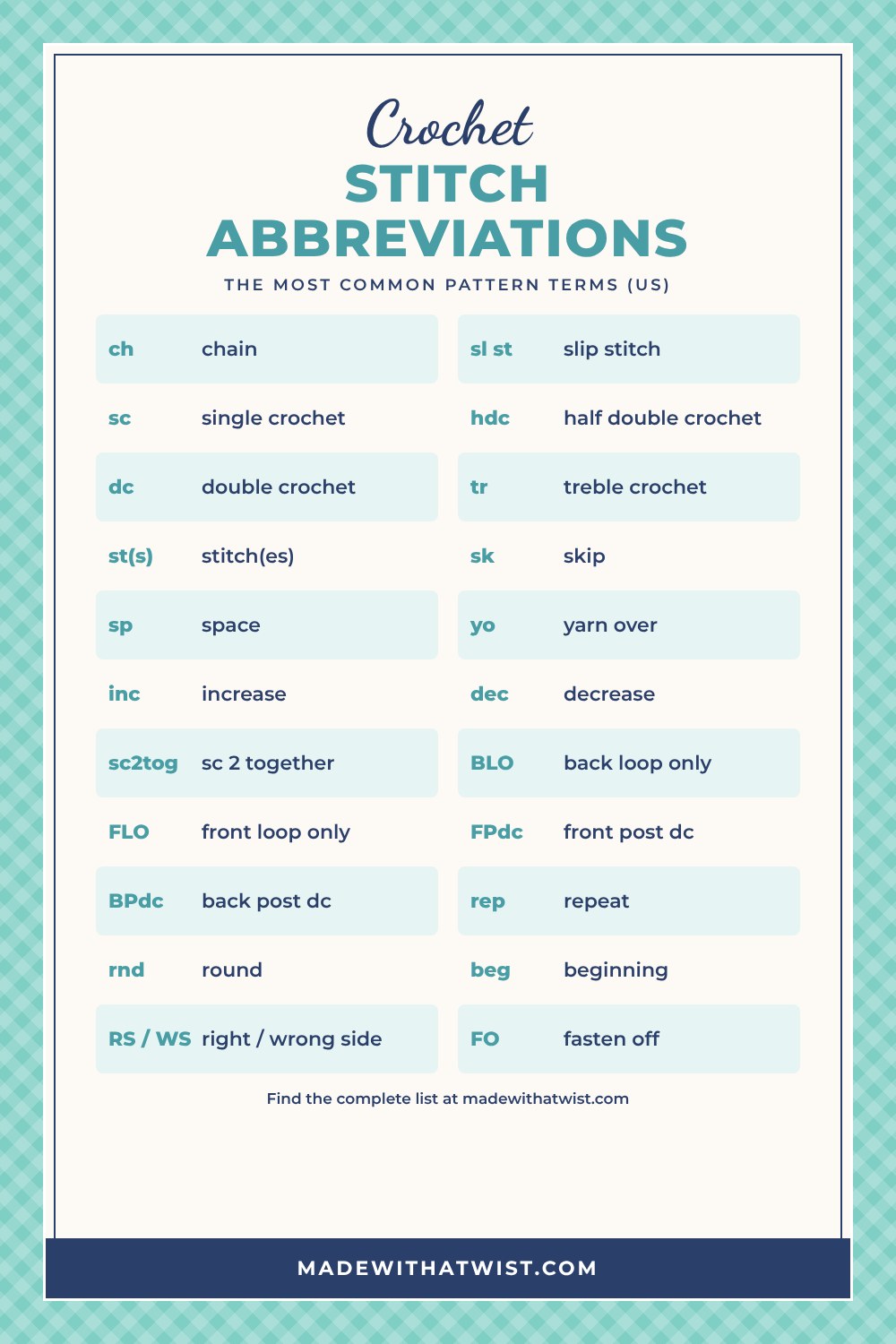
- Crochet Abbreviations: Complete List for Beginners (US Terms)
- How to Crochet a Chain (and Count Your Foundation Chain)
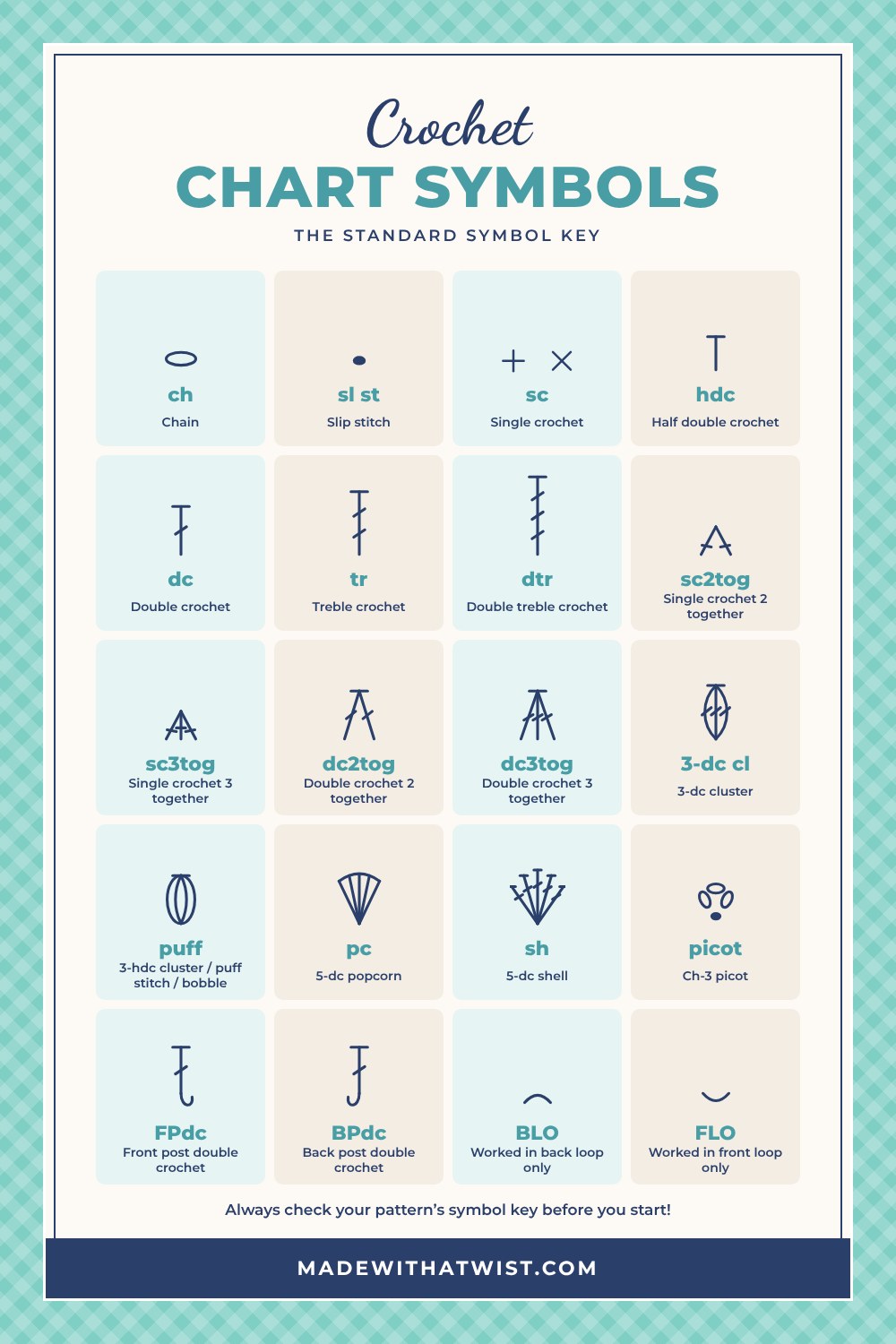
- Crochet Chart Symbols: How to Read a Crochet Chart
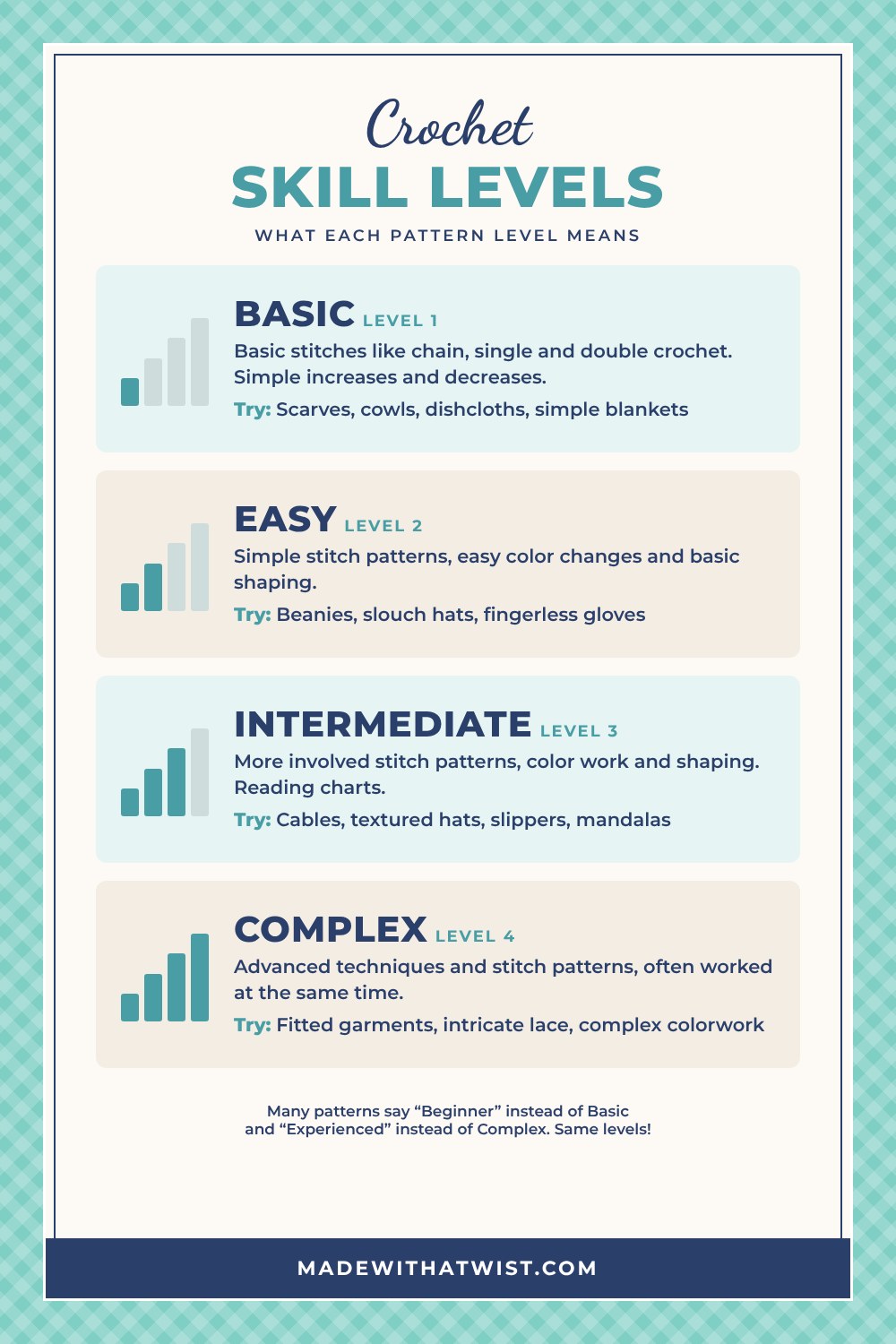
- Crochet Skill Levels Explained: Beginner to Experienced